




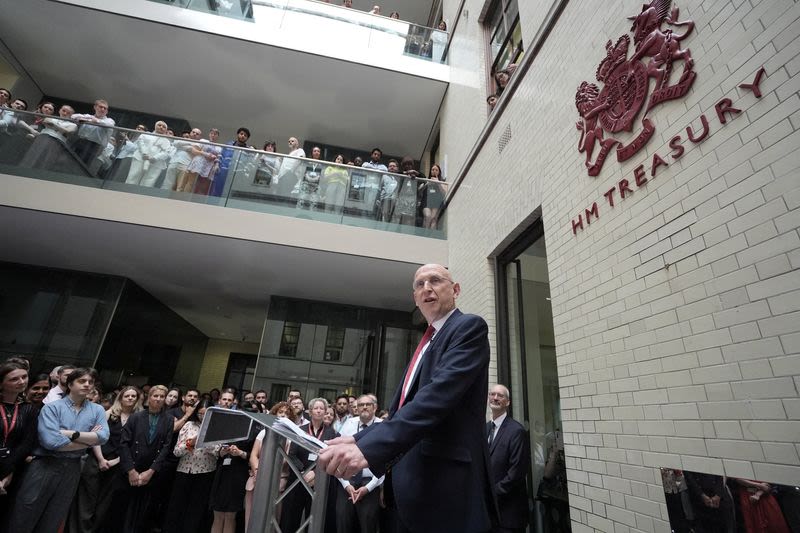
LONDON, Sept 7 (Reuters) – British finance minister John Healey is under pressure to raise billions of pounds in tax at his first budget. He needs to offset higher borrowing costs and fund Prime Minister Andy Burnham's plans for expanded social care and more defence spending.
Healey is due to announce his first budget on October 28. Here are some tax increase options he is considering.
Burnham said last year, when he was mayor of Greater Manchester, that Britain overtaxed workers and undertaxed wealth. He also pledged to keep Labour's commitment not to raise the rates of income tax, value-added tax, corporation tax or social security contributions.
Britain raised £1.1 trillion ($1.5 trillion) in tax in the 2025/26 financial year.
Budget forecasts in March showed the government had a relatively narrow £24 billion of leeway to meet its target of balancing day-to-day spending and tax revenue by 2029/30. Many economists think that headroom has narrowed sharply since.
Capital gains tax raised £24 billion in the 2025/26 tax year. Britain's previous finance minister, Rachel Reeves, increased the rate to 18% for basic-rate taxpayers and 24% for higher-rate taxpayers.
That is lower than income tax rates of 20% and 40% paid by basic and higher-rate taxpayers. Earlier this year, Wes Streeting, then a potential challenger to Burnham and now defence minister, suggested CGT rates should match income tax.
The left-leaning Institute for Public Policy Research has made a similar proposal.
In August 2025, the University of Warwick's Centre for the Analysis of Taxation estimated that a comprehensive reform to CGT would raise an extra £11 billion a year.
As well as raising rates to the same level as income tax, this reform ends the exemption on CGT when someone dies but includes a new tax-free allowance to exempt normal investment returns. CGT would also be charged on unrealised gains when someone emigrates from Britain.
However, the sums raised from increasing CGT are disputed. In June 2025, Britain's tax office estimated that raising the higher CGT rate by 10 percentage points would lower revenue by up to £3.6 billion a year due to increased tax avoidance.
Council tax, an annual levy paid by property occupiers, raises £54 billion a year, while stamp duty on property purchases raises £17 billion.
Council tax is based on the relative values of properties in 1991. Up-to-date valuations would sharply increase payments in London and much of southern England and lower them elsewhere.
Most economists view stamp duty as an inefficient source of revenue as it discourages people from moving house to find work and older households from downsizing.
Last month, in an IPPR paper, University of Oxford Professor Ben Ansell proposed a 0.65% property value tax to replace revenue from council tax and stamp duty.
Before he was prime minister, Burnham was listed as a supporter of a proposal from the Fairer Share campaign group to merge both taxes into a single 0.48% levy on property values.
However, in July Burnham ruled out scrapping stamp duty or council tax at October's budget. He said he wanted to make tax "fairer" and backed plans announced last year which will charge extra council tax from 2028 on homes worth more than £2 million.
Charity Oxfam and campaign