




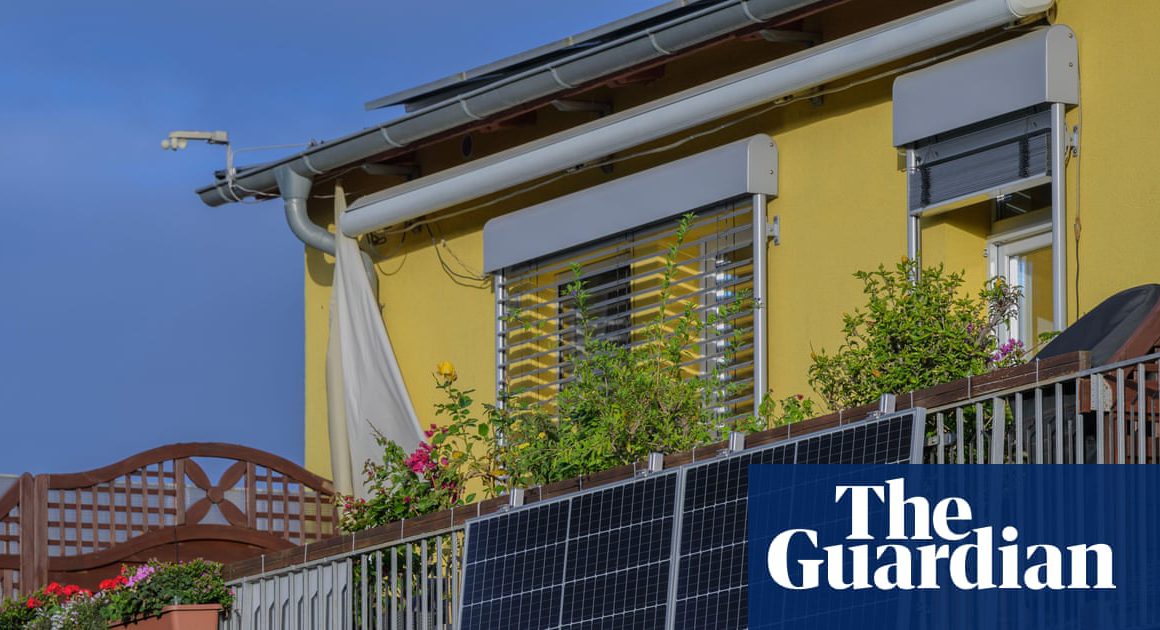
Plug-in solar panels go on sale in the UK for the first time from Thursday, allowing households that cannot use rooftop panels to generate their own cheap electricity.
Households across the country will join the millions in mainland Europe who generate renewable electricity using balcony solar panels. Some of the UK's biggest retailers will stock them.
Argos will be the first to offer the DIY solar systems this week, helping people in flats or rented homes without roof access to lower their bills by generating their own electricity.
Rival retailers Amazon, Currys, B&Q and Screwfix are expected to stock plug-in panels in the coming weeks. Prices start from about £400 to £500, depending on system capacity.
The devices are already popular in Spain and Germany, where they are known asBalkonkraftwerk (balcony power plant). They plug into a standard wall socket to generate solar power from a balcony, terrace, shed roof, or any outdoor space.
The solar power flows directly into the property's electrical circuit to power appliances, reducing the amount bought from the grid. Each system must be registered so Great Britain's National Energy System Operator can gauge how the cumulative impact of these panels could cut the need for gas-fired power or imports.
The 800-watt systems due to go on sale in the UK are about a fifth of the size of a typical residential rooftop set-up. They cannot power a home alone, but they could save the average household up to £110 a year on electricity bills.
Miatta Fahnbulleh, the energy secretary, said: “Plug-in solar is a simple, affordable way for households to take control of their energy bills and start saving straight away.”
Graham Biggart, managing director for Argos, said: “By making this technology more accessible, we’re putting more power in the hands of our customers and helping them explore practical ways to manage energy use at home.”
Savings from each system depend on how much solar power is generated, which can be affected by panel orientation and daily weather.
Savings also depend on whether the household can use the electricity while it is generated, perhaps by running washing machines or dishwashers during sunny spells. Plug-in batteries were not included in the new legislation allowing plug-in solar sales to begin.
Emily Seymour, energy editor at the Which? consumer group, said: “These smaller systems will generate less electricity than conventional rooftop solar and won’t be suitable for every home. People may need planning permission or the consent of the building owner before going ahead, so it will be important to check your own circumstances before making a purchase.
“There are also important safety considerations, particularly around the suitability of older electrical systems, the safe mounting of panels and the potential for people to use products or equipment incorrectly.”
Joanna O’Loan, a manager at Energy Saving Trust, said: “While the savings will vary from home to home, plug-in solar panels will give more people greater control over their energy use and costs. As these products become more widely available, access to clear and reliable information is essential to help people make informed choices that are right for their home and budget.”