



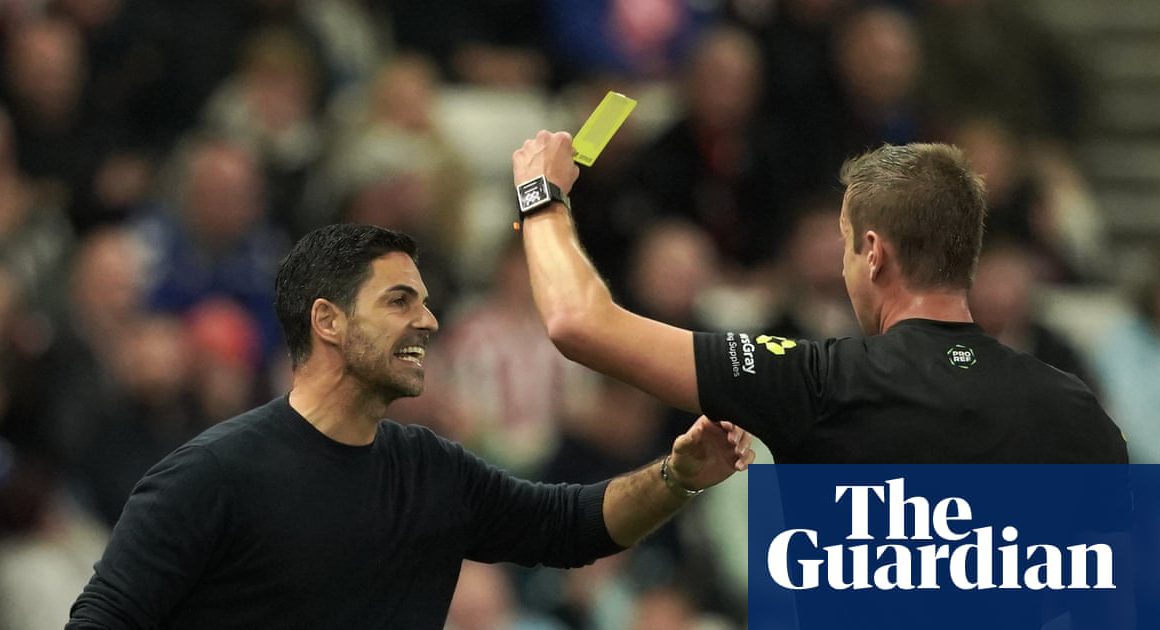
Refereeing has become an impossible job, largely because of the culture of micro-analysis that Arsenal manager Mikel Arteta has helped to create. A gentleman is never rude unintentionally, only by design. Nobody knows who first said that, but it could easily be a line from an elite football manager's guide to press conferences. Nothing happens by accident in these settings. Every word spoken in front of the sponsored board is metered and planned. A manager is never angry, concerned, or charming unintentionally. The game is the game, but so are all the other bits spilling out around it.
It was hard not to think about this while listening to Arteta discuss the penalty awarded to Sunderland at the Stadium of Light, for a perceived act of grappling on Dan Ballard by Ezri Konsa. This is said with genuine professional respect. As everyone who has ever done a podcast knows, and that is, let's be clear, everyone, there are moments when you have to flip the switch, up the energy, and turn on full clip‑this‑bit‑up‑please‑Dave sincerity mode. Arteta did this beautifully in the moment, appearing genuinely struck by what he was saying, radiating wounded integrity, like a disappointed junior headmaster appealing for the return of the school minibus keys.
Let's be clear though. Arteta is not "very worried" about all this. He's not "sad" or, as he later emphasised for good measure, "really sad". He's not concerned solely with "protecting the game", speaking here for all of us, just a fan of football. Come off it. This is a manager known to be obsessed with the most marginal of gains, to micro-plan the micro-details. As is all elite sport now. There has been talk of rowing coaches installing fibreglass toilet seats at their training hubs, having calculated that athletes spend 20 minutes there, which is key glute management time. Arteta loves this stuff. There's no way Ben White isn't sitting fiddling with his phone on a gold-standard Easy‑Cup Mega-Soft Evacu-Throne.
So it is with his public statements. This will have been gamed and contingency-planned in advance, for hard, rational, tactical reasons, because that is how the game is played and run now. So what does it mean? There are three things we know for sure. First, Arteta was right. This was a bad refereeing decision, most obviously factually wrong. Ballard very skilfully pulled Konsa down on top of him, while simultaneously feigning shock that such a thing could happen. It was doubly bad because the referee's response was pre-planned, flagged by the early-season chat about refereeing in a more interventionist fashion. Go into any situation with a voice in your head, a vaguely worded mission to fulfil, and this will skew your judgment.
The second thing is that referees are not biased. They're just not very good. Two things have happened to them. First, the barrage of information to be absorbed in real time during a game is now utterly mind-boggling. Most referees are not from a high-pressure data-processing background. These are not military pilots or traders on a currency floor. Less than a quarter have an academic degree. The task is beyond them. This is not a slur or an insult, but a simple description of what is happening, as supported by the evidence. This is doubly annoying because referees have become fundamentally confused about their role. [Referees](https://