




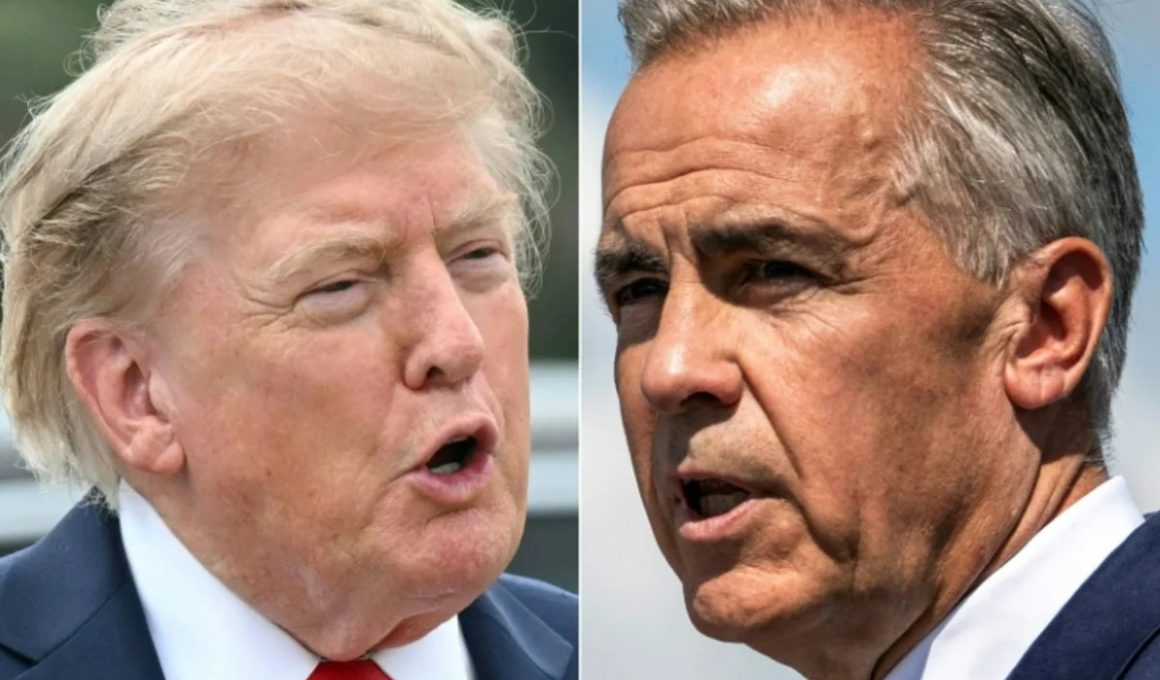
Canadian Prime Minister Mark Carney said on Tuesday that cutting economic ties with the United States would come at a cost, but the benefits were clear, as President Donald Trump threatened new penalties against Canada.
Canada's retaliatory tariffs took effect earlier Tuesday, applying to $27.6 billion (US$20 billion) in US imports, covering steel and aluminum products as well as dairy goods such as cheese.
As the trade war between the two North American neighbors intensified, Carney said Canada has "everything we need to pivot and prosper." He added: "That pivot will come at a cost. There's always a cost to action. But it doesn't come close to the cost of standing still."
Ottawa's response follows President Trump's tariffs on a similar value of Canadian products, which Washington said were in response to "discriminatory treatment" of US alcohol, automobile, and dairy industries.
In response to the latest Canadian levies, Trump pledged to restrict Canadian companies from winning US government contracts. In a social media post, Trump said he was directing officials "to REMOVE Canadian-origin products from GSA's Multiple Award Schedules," referring to a General Services Administration program for long-term contracts. Trump added that contracts through such schedules account for more than $50 billion a year.
On Monday, Trump threatened to try to block sales of Canada's Bombardier Aviation unless the Quebec-based plane maker moves manufacturing to the United States. In response, the aerospace company noted that it has created tens of thousands of jobs across the United States, with direct employment in more than 20 states, including Kansas, Texas, Arizona, and California.
The two Republican senators from Kansas said they had raised their concerns with the White House. "I'm going to fight to keep Bombardier's more than 1,200 Kansas jobs. I've already taken that concern inside the Oval Office," Senator Roger Marshall posted on X, with similar comments posted by Senator Jerry Moran.
US tariffs pose a modestly negative risk to Canada's overall economy, but analysts say they have a sharper impact on central Canada's manufacturing sector. Trade lawyer Ryan Majerus said Trump's latest move restricting Canadian access to US government contracts "definitely has teeth to it" and could widen the scope of affected goods beyond those hit by tariffs.
"I don't believe in escalating the conflict. That's not constructive," Carney said in his video statement Tuesday. "But our tariffs are necessary to protect our workers, protect our companies, and protect our communities. This is about who we are as Canadians."
Negotiations between the two sides broke down on August 21 after days of meetings in Washington. At the time, Carney said US negotiators had introduced restrictions on Canadian trade deals with other countries at the eleventh hour. He added that US officials also made unacceptable "threats" to the French language and "Quebec culture," referring to the French-speaking province in eastern Canada.
Ottawa and Washington have not resumed talks since, and Trump has continued his attacks.