



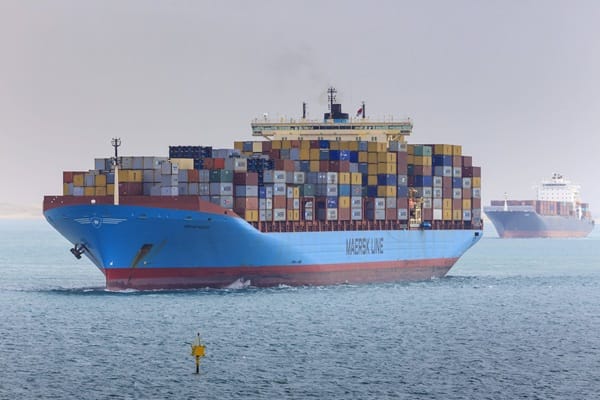
The UK's trade agreement with Malaysia under the Comprehensive and Progressive Agreement for Trans-Pacific Partnership took effect on 15 December 2024. It gave British exporters something they had never had before: a trade deal with a Southeast Asian economy that had been outside every previous UK agreement. The first full year of that access has now been measured, and the figures do not match the announcements. UK exports to Malaysia went down.
The Department for Business and Trade released the numbers on 31 July. In the four quarters to the end of March 2026, total trade in goods and services between the two countries came to £6.4 billion, up 5.0% on the year before. Under that headline, the two sides moved in opposite directions. UK exports to Malaysia fell 2.0% to £3.5 billion, a drop of £70 million. UK imports from Malaysia rose 14.8% to £2.9 billion, a gain of £377 million. Almost all of the increase in trade came from goods moving towards Britain.
This was not the projection. When the treaty was signed, the estimate put a potential £700 million boost to the London economy in the long run. That relied on more than 99% of existing UK goods exports to the bloc becoming eligible for zero tariffs and a services sector that already sends £30 billion a year to CPTPP countries. The logic was simple. Remove the duty and the volume follows.
A year of data suggests the duty was not what was holding the volume back. Malaysia remains the UK's 41st largest trading partner, accounting for 0.3% of total UK trade, a position essentially unchanged by the agreement. The departmental factsheet also records the one number that did move decisively: UK foreign direct investment stock in Malaysia reached £7.2 billion at the end of 2024, £3.8 billion higher than a year earlier. British capital went in. British exports did not follow it.
Look at what Britain actually sells Malaysia and the shape of the problem becomes clearer. The largest category is mechanical power generators, an intermediate good, at £290.8 million, which is 18.9% of all UK goods exports to the country. It fell 25.1%. Cars came second at £139.8 million, down 24.8%. Miscellaneous electrical intermediates were third at £78.1 million, down 19.5%. Of the top five lines, only scientific instruments grew.
That is a portfolio of capital equipment and industrial inputs. Categories like these turn on a small number of large contracts and procurement cycles, and they rise or fall on things a tariff schedule does not touch: whether a power project reached financial close, whether a manufacturer refreshed a production line. Reading a 25% decline in turbine sales as a failure of market access misreads it. There was no tariff wall in front of those goods to begin with, and removing one did not create demand.
It is also a very thin book. The fourth largest UK goods export to Malaysia is pulp and waste paper, at £72.2 million. When a category like that sits in the top five, the list is telling you the relationship is narrow rather than large, and narrow relationships are volatile by construction. A single deferred order shows up as a national statistic.
The more useful question is what Britain is not selling into Malaysia at all.
Britain is the second largest services exporter in the world, and services make up roughly 80% of UK GDP. London alone accounts for 48% of UK services exports. Yet Malaysia sits as only the 41st largest market for UK services, taking 0.4% of the total. The country where Britain is strongest is the country where Britain has barely shown up.
Meanwhile the part of Malaysian demand that is compounding is consumer and household spending, and it has moved onto rails that look nothing like Britain's. Non-cash payment use among Malaysians climbed from 51% of the population in 2023 to 72% in 2026. Among those users, wallet apps now run at 81%. The average electronic money transaction rose to RM43 in 2025 from RM33 the year before, which is the signature of people paying for ordinary things rather than occasional ones. Frequency tells the same story: the average Malaysian made 538 electronic payments during 2025, up from 432 the year before. Touch 'n Go leads, with Maybank's MAE the closest challenger.
The direction of travel is now explicit enough that Malaysian coverage has started describing wallets as displacing credit and debit cards outright rather than supplementing them. For a British business, that is the detail worth sitting with. Britain runs a card economy, and contactless card habits are so embedded here that a UK firm's default checkout is built around them. In Malaysia, that default is increasingly the wrong one.
None of this is a tariff question, which is precisely why the trade agreement is silent on it. CPTPP addresses duties, rules of origin, data flows and procurement. It does not require anybody in Kuala Lumpur to accept a Visa payment, and it cannot make a British checkout feel native to someone whose everyday payment instrument is an app.
The sectors that worked this out first were the ones selling directly to Malaysian consumers, where the cost of getting it wrong is immediate. A business-to-business exporter with a signed contract and an invoice does not lose the sale because settlement is awkward. A consumer-facing service does. If the payment method at checkout is not the one already on the customer's phone, the purchase is simply abandoned, and no amount of tariff relief recovers it.
That makes those sectors a useful place to look for evidence, because a handful of them publish their integrations openly. Online gambling is an unusually legible case: comparison pages record which e-wallets Malaysian gambling sites actually accept operator by operator, and the split is consistent. The platforms that genuinely localized list Touch 'n Go, DuitNow, GrabPay, Boost and ShopeePay. The ones that did not fall back on international card and transfer processors, and sit lower down the same tables. Whatever one thinks of the sector, it is a public, brand-by-brand record of which payment instruments actually convert in that market, and there are very few of those.
The practical reading of the DBT release is not that CPTPP failed. Tariff access is worth having, and the investment figures show British capital using it. It is that the agreement removed a barrier which was not the binding one for the categories where Britain could realistically grow.
For a UK services or consumer business assessing Malaysia now, the tariff schedule is close to irrelevant and the localization work is close to everything: pricing in ringgit, integrating the wallet apps that 81% of non-cash users already carry, and accepting that a card-first checkout reads as foreign. That is unglamorous, it does not generate a treaty signing, and it is where the £3.5 billion figure will actually be decided.
The next factsheet lands on 24 September. Whether the export line has turned by then will say less about trade policy than about how many British firms did that work.
Please play responsibly. For more information and advice visit https://www.begambleaware.org
Content is not intended for an audience under 18 years of age